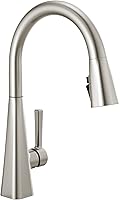
How to Choose a Kitchen Faucet: Holes, Spout and Finish
Choose a kitchen faucet by checking your sink holes first, then compare spout reach and height, sprayer style, handle placement and finish. Measure the sink and counter before you narrow your options.
On this page (8 sections)
- How do you choose a kitchen faucet that fits your sink holes?
- What spout height and reach work for your sink?
- Should you choose a pull-down, pullout or fixed spout?
- Which handle and controls should you choose?
- How do you choose a kitchen faucet finish?
- What should you check before you buy a kitchen faucet?
- How should you choose a kitchen faucet for your needs?
- Frequently asked questions
To choose a kitchen faucet, match its mounting setup to your sink, then check spout fit, sprayer style, handle placement and finish. Measure the sink and counter before you shop so the faucet works with your layout and everyday tasks.
Start with the holes already in the sink or countertop. Then think about the largest pot you fill, how you rinse dishes and whether you want a pull-down, pullout or touchless model.
For a wider look at the available styles, see our kitchen faucet guide. This guide helps you narrow the fit before comparing models.
How do you choose a kitchen faucet that fits your sink holes?
Count the mounting holes and measure their spacing before choosing a faucet. A faucet designed for one hole may still fit a three-hole sink if it includes a suitable deckplate, but check the exact installation options.
A deckplate covers extra holes beneath a wider base. If you prefer separate controls or accessories, you may want a faucet designed for a multi-hole arrangement instead.
| Sink setup | What to check |
|---|---|
| One hole | Look for a faucet that supports single-hole installation |
| Three holes | Check the distance between holes and whether the faucet includes a suitable deckplate or separate components |
| More than three holes | Measure the layout and identify which openings will remain visible or need covers |
Hole count alone does not confirm a fit. Check the faucet's mounting instructions and the sink's hole spacing before ordering.
Our guide to 1-hole vs 3-hole kitchen faucets explains the common layouts and what to measure. If you are replacing an existing faucet, compare its mounting arrangement with the new model before removing it.
What measurements should you take before choosing a kitchen faucet?
Measure hole spacing, counter thickness and the clearance below the sink. These details help you catch fit problems before installation.
Note the distance from the faucet hole to the sink basin and the nearest wall or backsplash. A handle needs room to move, and a tall faucet needs overhead clearance.
Check the space below the sink for hoses, supply lines and installation hardware. A faucet may fit the top of the counter but still be awkward to connect in a crowded cabinet.
What spout height and reach work for your sink?
Choose a spout that clears your largest cookware and reaches the useful part of the basin. A tall arc can give you more room under the faucet, while a lower profile may suit limited overhead space.
Spout reach affects where water lands in the basin. A short reach can make the stream fall close to the back edge, while a long reach may put it near the center or front.
Before you choose, think about how you use the sink:
- Fill a stockpot in the basin, or carry it from the counter?
- Rinse produce near one side of the sink?
- Need clearance for stacked dishes or a large pan?
- Have a window, shelf or cabinet above the faucet?
Measure from the mounting hole to the inside of the basin, then compare that distance with the faucet's stated reach. Also check its total height against shelves and cabinets.
Choose height based on sink depth and overhead clearance. A high arc can look striking, but it still needs to work with the space around your sink.
Should you choose a pull-down, pullout or fixed spout?
Choose a pull-down faucet for reaching around the basin, a pullout model if you prefer a wand that extends toward you, or a fixed spout if you do not need a movable spray head. Your sink size and routine matter more than the style name.
Pull-down spray heads extend from the spout and point into the basin. Pullout models extend toward you and can be handy when you want to direct water into a container beside the sink.
A fixed spout keeps the setup simple, though it does not offer the same flexible reach. Some faucet designs include a separate side sprayer, so check whether one is included if that feature matters to you.
For a closer comparison, read pull-down vs pullout kitchen faucets. The Moen Adler Pulldown (87233SRS) offers two spray modes, while the Moen Renzo Pullout has a pullout hose and an optional deckplate for three-hole installation.
Which handle and controls should you choose?
Choose a handle position that you can reach without hitting a wall, backsplash or window trim. A single lever controls both water flow and temperature, while separate handles need room for each control.
Check whether the handle sits on the right, left or center. If the faucet will sit close to a wall, confirm there is room for the handle to move through its full range.
Touchless models add sensor controls, but still check their power setup and manual controls. The Moen Arbor Touchless (7594EWSRS) includes 6 AA batteries and offers optional AC power.
If you are comparing sensor features with a standard handle, our guide to whether touchless kitchen faucets are worth it covers the trade-offs.
How do you choose a kitchen faucet finish?
Pick a finish that works with your other fixtures and the amount of visible upkeep you can accept. Chrome has a bright, reflective look, while stainless finishes can coordinate with stainless appliances.
Finish names can be similar while the actual look varies by brand. Compare the faucet with cabinet hardware, sink accessories and nearby appliances in the same lighting.
Moen says the Spot Resist Stainless finishes on the Moen Adler Pulldown (87233SRS) and Moen Renzo Pullout resist fingerprints and water spots. You'll still need to clean the faucet as part of regular care.
Our kitchen faucet finish guide compares common looks and what to consider when matching them.
What should you check before you buy a kitchen faucet?
Before buying, confirm the mounting fit, measurements, sprayer arrangement and included installation parts. A short check can prevent a mismatch between the faucet and your sink.
Use this checklist:
- Count and measure the sink or countertop holes.
- Confirm whether the faucet supports that layout and includes a suitable deckplate if needed.
- Measure spout reach, height and clearance above the sink.
- Check handle placement and nearby wall or backsplash clearance.
- Choose the spray style and decide whether you need a pull-down, pullout, touchless or fixed spout.
- Check finish compatibility with the other fixtures you can see.
- Review the installation method, included parts and connection requirements.
If the existing faucet is staying in place until the replacement arrives, compare the two installation layouts first. Our guides on how to replace a kitchen faucet and how to remove a kitchen faucet walk through those next steps.
How should you choose a kitchen faucet for your needs?
Choose a pull-down or pullout sprayer for flexible rinsing, touchless controls for motion activation, or a low-arc model when overhead space is tight. Check the mounting fit and handle clearance before settling on that style.
Pick the Moen Adler Pulldown (87233SRS) for two spray modes or the Moen Renzo Pullout for a wand that extends toward you. The Moen Arbor Touchless (7594EWSRS) adds sensor controls, while the Moen Chateau 3-Hole (Chrome) offers a low-arc spout without a side sprayer.
Use our kitchen faucet guide to compare style types, and measure your current setup before settling on a model.
Frequently asked questions
Mounting fit, sprayer reach and clearance are the main checks when choosing a kitchen faucet. These answers explain how to compare them with your sink and routine.
Does a kitchen faucet have to match the number of sink holes?
The faucet must support your mounting layout, but a suitable deckplate can cover unused holes. Check the spacing and installation options for both the sink and faucet before choosing, since hole count alone does not confirm a fit or show which extra openings need covers.
Is a pull-down or pullout kitchen faucet better?
A pull-down sprayer suits rinsing around the basin, while a pullout wand extends toward you for filling containers and directing water. Neither style is better for every kitchen; choose based on basin size, spout shape, available clearance and how you rinse cookware or fill containers.
What faucet finish is easiest to keep looking clean?
A finish designed to resist fingerprints and water spots may help reduce visible marks, but no finish stays clean without care. Moen says its Spot Resist Stainless finish resists both; choose a look that matches your fixtures and follow the faucet's care instructions.
How much clearance should a kitchen faucet have?
There is no single clearance that fits every sink and kitchen. Measure the faucet's full height, the distance to shelves or cabinets, and the handle's movement space; also check that the spout reaches the basin where you need it and leaves room for your cookware.