Pull-Down vs Pull-Out Kitchen Faucets: Which Is Better? (October 2026)
The pull down vs pull out kitchen faucet choice comes down to movement and fit: choose pull-down for rinsing inside the basin or pull-out for outward reach. Check faucet height, mounting holes and hose clearance before buying.
On this page (8 sections)
- Pull-down vs pull-out kitchen faucet: what is the difference?
- Which faucet works better for your sink?
- Which style is easier for everyday tasks?
- How do these 3 faucets suit different buyers?
- What should you check before buying?
- How should you set up and care for either style?
- Which common mistakes should you avoid?
- Which should you choose for your kitchen?
Choose a pull-down for rinsing inside the basin or a pull-out for outward reach and a lower-profile option. The pull down vs pull out kitchen faucet decision starts with how you use the sink, then comes down to clearance and fit.
A tall arch helps when you move large cookware beneath the spout. A shorter pull-out can leave more room below a shelf or window, with a wand that comes toward you.
Both styles need space for a moving hose under the sink. Neither solves a cramped cabinet or poorly placed stream simply by having a removable spray head.


Pull-down vs pull-out kitchen faucet: what is the difference?
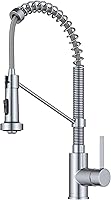
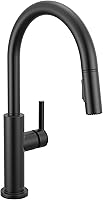
The main difference is where the wand starts and how you pull it free. Pull-down faucets usually have an arched spout with a downward-facing head; pull-out faucets usually place a larger wand in a shorter, more forward-facing body.
Once removed, either wand can be aimed around the basin. The names describe the starting motion, not a limit on where water can go.
A pull-down often suits a routine built around washing dishes in the sink. A pull-out can suit someone who wants to bring the wand toward the front edge or fill a container beside the basin.
Those are useful starting points, but individual designs overlap. For a broader look at the available types, see our kitchen faucet guide.
How does a pull-down vs pull-out kitchen faucet feel to use?
A pull-down asks you to reach up and pull down, while a pull-out asks you to grip the wand and draw it toward you. Your arm position and grip can make one motion more comfortable.
Think through the full action: grasp the head, release it, aim the water, change modes and return it. A convenient starting position matters less if the control button is awkward to reach while holding the wand.
If possible, handle a display model before choosing. Check whether you can guide the head back with one hand without bending your wrist into an uncomfortable position.
Which faucet works better for your sink?
Choose the faucet whose height, spout position and wand path fit the basin. Kitchen size alone is a poor guide because a small kitchen can have a deep sink, while a large kitchen can have limited clearance above it.
Measure from the mounting surface to the lowest shelf or cabinet above the faucet. Include anything that moves nearby, such as a window sash or cabinet door.
Next, consider where the fixed stream will land. A stream near the basin edge can splash onto the counter or make washing awkward, even when the faucet fits through the mounting hole.
For help comparing these measurements, see how to choose a kitchen faucet.
Is a pull-down better for a deep sink?
A pull-down is a strong choice when you want room for large cookware and downward rinsing. You can lower the head toward a pan instead of letting water fall from the full spout height.
A deep basin also contains more of the spray when you rinse near its bottom. Keep the wand close to the surface you're cleaning rather than spraying across the entire sink from above.
Skip a tall design if it crowds the space overhead or makes the spray head difficult for you to reach. More height is useful only when you can use that room comfortably.
Is a pull-out better when cabinet space is tight?
A pull-out is often the better starting point when clearance above the sink is limited. Its shorter body can leave space beneath shelving, though you must still check the exact dimensions.
Low height doesn't remove the need for clearance behind the faucet. A handle that swings toward the backsplash can be blocked before it reaches its full range.
Also distinguish overhead clearance from cabinet space below. Both styles use a moving hose, so neither is a shortcut around crowded plumbing or storage beneath the sink.
Which style is easier for everyday tasks?
A pull-down suits basin-focused cleanup, while a pull-out suits tasks that benefit from bringing the wand forward. Choose around your most frequent job rather than an occasional task.
For large pans, consider how you wash them. If you stand the pan inside the basin, downward rinsing is useful; if you hold it near the front edge, outward wand movement may suit your reach better.
For produce, use a gentle flow and keep food supported in a bowl or colander. Sprayer direction matters less here than being able to control the stream without chasing food around the basin.
Filling a container beside the sink can be convenient with either style if the hose reaches. Keep the container stable, stay with it as it fills and return the wand before moving away.
Do pull-down faucets splash more?
A pull-down doesn't automatically splash more, but a high stream falling onto a shallow basin or curved pan can scatter water. Stream position, flow and the angle of the surface all matter.
Start with a moderate flow, then lower the head before switching to a stronger rinse. Aim toward the basin bottom instead of directly at the sink wall or the back of a spoon.
If flow becomes uneven or suddenly weak, address the cause before blaming the faucet style. Our guide to low kitchen faucet water pressure explains common checks.
Does a pull-out faucet reach farther?
A pull-out doesn't guarantee longer usable reach. Total hose length includes sections inside the faucet and cabinet, so it isn't the distance the wand can extend across your counter.
Consider the route as well as the distance. Reaching around a large pot or across a divided sink uses more hose than aiming straight down.
Don't plan to pull the hose tight for a routine job. Leave enough slack to aim the wand without tugging on its connections or scraping the hose across the sink edge.
How do these 3 faucets suit different buyers?
Choose the Adler for a tall pull-down, the Renzo for limited overhead space, or the Almari for magnetic docking. Each solves a different fit or use problem, so start there before comparing secondary features.
Moen Adler Pulldown (87233SRS)
The Moen Adler Pulldown (87233SRS) suits cooks who rinse large cookware inside the sink. Its high-arc body stands 14.56 in tall, so it needs more overhead room than the other options here.
Moen's Reflex system supports wand movement, retraction and secure docking. The aerated stream and rinse modes let you switch between filling a vessel and directing water at food residue.
Moen says Power Clean provides up to 50% more spray power while minimizing splash. Keep the head close to the work rather than relying on stronger spray from a distance.
Choose it for frequent in-basin rinsing; skip it if the tall head is hard to reach or sits beneath a low obstruction. Its included deckplate supports 1- or 3-hole installation.
Moen Renzo Pullout
The Moen Renzo Pullout suits kitchens where a tall arch would crowd the space above the sink. At 9.38 in tall, it's the lowest option in this comparison.
The retractable wand comes toward you, which can suit filling and rinsing near the front of the basin. Its lower body also makes it worth considering if reaching up for a spray head is uncomfortable.
Duralock provides a quick-connect system for installation, and an optional deckplate is included for a 3-hole setup. That connection feature doesn't remove the need to check mounting dimensions and supply fit.
Choose it when low height is the main constraint. Skip it if your priority is placing tall cookware beneath the fixed spout without moving the wand.
Delta Almari Pullout (Brushed Nickel)
The Delta Almari Pullout (Brushed Nickel) suits buyers who remove and return the wand often. Its MagnaTite magnetic docking holds the head in place when you finish.
The body stands 11.5 in tall, placing it between the 2 Moen models for overall height. Its 54 in hose still needs a clear path beneath the sink.
Touch-Clean spray holes allow you to wipe away calcium and lime buildup with a finger. Delta also uses DIAMOND Seal Technology to reduce leak points and backs the faucet with a Lifetime Limited Warranty.
Choose it for its docking and nozzle-care features. Skip it if you need the lowest body here, and confirm that any 3-hole installation has the required 8 in centers for its included deckplate.
For more models with downward-moving wands, compare the best pull-down kitchen faucets. If you want a taller, restaurant-inspired shape, see our commercial-style kitchen faucets.
What should you check before buying?
Confirm mounting fit, handle clearance and hose space before choosing a finish. A faucet can match your preferred style and still require changes to the sink setup.
Count all openings and note which ones serve the faucet, soap dispenser or separate sprayer. A deckplate covers unused openings only when its width and supported spacing match.
Check the mounting-hole diameter and deck thickness against the installation instructions. Also confirm that the included connections suit your shutoff valves.
Faucet dimensions aren't universal, even within one style. Our guide to kitchen faucet sizes explains the measurements that matter.
How much space does the hose need below the sink?
The hose needs an open path through its full movement, including room for its return mechanism. Clear away bins, cleaning bottles and anything that could catch the loop.
Look for contact with drain pipes, shutoff valves or a disposal. Don't force the hose around an obstruction or secure its moving section to plumbing.
Check this with cabinet doors closed as well as open. A storage rack attached to the door can intrude into space that looked clear during installation.
Does finish affect the choice?
Finish affects appearance and care, rather than the direction the wand moves. Choose a finish you like, then follow the cleaning instructions for that exact faucet.
Both Moen options have Spot Resist Stainless finishes, which Moen says resist fingerprints and water spots. That reduces visible marks but doesn't replace wiping away residue.
The Almari has a brushed finish. Compare it with your sink and nearby hardware, since similar finish names across brands don't ensure identical color.
Our kitchen faucet finish guide can help narrow the look before you order.
How should you set up and care for either style?
Set up either style so the hose moves freely and all connections remain dry. Follow the model's instructions for mounting, hose routing and any weight placement.
Before removing the old faucet, make sure the shutoff valves stop the water. If you're planning the replacement yourself, follow our kitchen faucet replacement guide for the wider job.
After installation, flush the faucet as directed, then inspect connections while water runs and again afterward. Extend and return the wand several times to check for catches.
Guide the head back into its dock instead of letting it snap home. If return movement becomes difficult, check for an obstruction before pulling harder.
For regular care, use a soft cloth and the brand's approved cleaner. Avoid abrasive pads, and don't soak finished parts in a descaling solution unless the care instructions allow it.
Which common mistakes should you avoid?
Avoid buying by faucet height alone or treating hose length as usable extension. These mistakes can leave you with a faucet that fits the counter but doesn't suit your routine.
- Choosing extra height without checking stream placement: a tall arch helps with cookware clearance, but the fixed stream still needs to land well inside the basin.
- Assuming every pull-out is compact: compare actual dimensions and handle travel.
- Ignoring storage below the sink: a hose caught behind a bin can make an otherwise suitable faucet awkward to use.
- Expecting a deckplate to fix every hole layout: measure spacing and check which accessories you want to keep.
- Using maximum spray for every job: start gently, bring the head closer and increase flow only as needed.
Which should you choose for your kitchen?
Settle the pull down vs pull out kitchen faucet choice with your main task and tightest clearance. Pick pull-down for downward rinsing with room beneath an arch; pick pull-out when forward wand movement or a shorter body suits your setup.
Choose the Adler for large cookware washed inside the basin. Choose the Renzo when low overhead clearance leads the decision, or the Almari when magnetic docking matters more than the lowest profile.
Before ordering, write down your available height, mounting layout and the route the hose must travel. If those checks point toward a tall arch, use our best pull-down kitchen faucet guide to compare more options.
Frequently asked questions
What is the difference between a pull-down and pull-out kitchen faucet?
A pull-down wand moves down from the end of an arched spout, while a pull-out wand moves outward toward you. Both let you aim water around the sink, but their starting positions differ.
Choose by the movement you prefer, then check the actual faucet height and reach.
Is a pull-down faucet better for a deep sink?
A pull-down often suits a deep sink because you can bring the sprayer closer to dishes and basin corners. The tall arch also leaves room above the sink for large cookware.
Check where the fixed stream lands, since height alone doesn't ensure the faucet reaches the right spot.
Is a pull-out faucet better for a small kitchen?
A pull-out can suit a small kitchen when overhead clearance is limited or you want the wand to come toward you. Measure the exact model rather than assuming all pull-outs are compact.
Its handle still needs room to move, and the hose needs clear space beneath the sink.
Can pull-down and pull-out faucets fit the same sink?
Either style can fit the same sink when the mounting hole, deck thickness and supported installation match. A deckplate can cover unused holes only if its dimensions suit the layout.
Also check supply connections, handle clearance and spout position before treating either style as a direct replacement.
Which is easier to use, pull-down or pull-out?
A pull-down is often easier for directing water into the basin, while a pull-out can make outward movement more natural. Your grip and reach matter as much as the style.
Compare the wand shape, control position and docking action, especially if lifting your arm or turning your wrist is uncomfortable.