Are All Kitchen Faucets the Same Size?
No, kitchen faucets aren't all the same size. Match the mounting holes and spacing first, then check deck thickness, base coverage, spout reach and clearance above and below the sink.
On this page (10 sections)
- What does kitchen faucet size mean?
- How many holes does your sink have?
- How do you measure faucet holes and spacing?
- Can a new faucet cover the old holes?
- How high should a kitchen faucet be?
- How far should the spout reach?
- Which pull-down faucet suits your sink routine?
- What should you check below and behind the sink?
- How should you install and care for a replacement?
- Are all kitchen faucets the same size, and which should you choose?
No, kitchen faucets aren't all the same size. Mounting holes, spacing, height and spout reach vary, and a faucet that bolts into place can still crowd your window or put water too close to the sink rim.
Start with the sink's mounting requirements, then check how the faucet will work during cooking and cleanup. A low spout, a pull-down head and a tall decorative faucet solve different problems.
What does kitchen faucet size mean?
Faucet size covers both mounting fit and working space. You need a secure connection to the sink or countertop, plus enough room to move the handle, fill dishes and direct water into the bowl.
Don't use overall width or depth as a substitute for spout reach. Reach measures the horizontal distance from the faucet's mounting center to its water outlet.
Why aren't all kitchen faucets the same size?
Kitchen faucets use different body shapes, mounting systems and spray arrangements. A compact low-arc model takes up a different space from a tall pull-down model, even when both can use one mounting hole.
For a wider overview of those choices, see kitchen faucets: pull-down, touchless and commercial style.
How many holes does your sink have?
Count the actual openings before choosing a replacement. One visible faucet body doesn't prove you have a one-hole sink, since a wide base may hide additional openings.
Look underneath with a flashlight to find the mounting points. Note which holes serve the faucet and which hold a soap dispenser or separate sprayer.
Don't discard a useful accessory just to match a new faucet. Plan which openings you'll use, cover with a compatible plate or close with suitable hole covers.
The Moen Chateau is a sensible option for a basic sink where you want a low-arc spout and single-lever control. Its aerated stream suits routine washing, but skip it if you rely on a separate spray head for rinsing large pans.
It has no side sprayer included. For a closer look at mounting choices, read 1-hole vs 3-hole kitchen faucets.
How do you measure faucet holes and spacing?
Measure both hole diameter and center-to-center spacing. Diameter determines whether the faucet's mounting parts can pass through; spacing matters when a faucet or plate spans multiple openings.
For a three-hole row, measure between the centers of the two outside holes. An 8 in center layout means those outside centers are 8 in apart, not that each neighboring pair is that distance apart.
Avoid measuring between hole edges or handle tips. If the old base hides the openings, inspect from below and confirm uncertain measurements once the faucet is removed.
Also measure the mounting-surface thickness. A faucet can match the hole layout yet fail to clamp securely if its mounting system cannot accommodate the countertop, sink deck or combined layers.
Can a new faucet cover the old holes?
A compatible deck plate can cover unused holes, provided it fits the layout and sits flat. Coverage alone isn't enough if a raised sink edge or nearby dispenser prevents the plate from sealing.
Measure the full area the plate must cover, then check its length and width. Allow for old marks around the existing base, which a smaller replacement may leave visible.
A plate cannot fix an undersized mounting hole or extend a mounting shank through an overly thick counter. Resolve those issues before buying rather than assuming a wider base solves every fit problem.
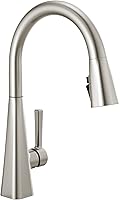
The Delta Lenta Pulldown (Brushed Nickel) fits one hole or a three-hole 8 in center installation with its included optional deck plate. That makes it worth considering when you want to keep a compatible three-hole sink and switch to a pull-down design.
How high should a kitchen faucet be?
Choose height around your overhead clearance and the items you wash. Overall faucet height tells you whether the body fits beneath a shelf, while outlet height affects room for pots.
Measure upward from the mounting surface to the lowest obstruction. Check an opening window's path too, since a faucet may fit beneath the frame but block the sash.
The Moen Chateau has an overall height of 8.5 in, compared with 16.25 in for the Delta Lenta and 17.06 in for the Delta Nicoli. These are overall heights, not measurements of the space beneath each water outlet.
A tall faucet doesn't guarantee comfortable pot washing in every sink. Bowl depth and outlet position also affect clearance, while a high stream falling into a shallow bowl can create more splash.
How far should the spout reach?
Aim for a water stream that lands comfortably inside the bowl. Too little reach can crowd the back wall; too much can put the stream near the front rim.
Measure from the faucet mounting-hole center to your preferred landing point. The drain is a useful reference, but your bowl shape and usual washing position matter more than hitting it exactly.
For a divided sink, check how the spout serves both bowls. Also confirm that its swing won't hit a dish rack, window trim or nearby wall.
A pull-down head adds freedom for rinsing corners, but it doesn't correct an awkward fixed-stream position. Compare the differences in pull-down vs pull-out kitchen faucets before choosing a spray style.
Which pull-down faucet suits your sink routine?
Choose the Lenta for spray-focused cleanup and the Nicoli for magnetic docking and a matte black finish. Both still need a confirmed mounting fit and clear space below the sink.
The Lenta suits cooks who regularly rinse pans and direct water around the bowl. Delta's ShieldSpray feature is designed to contain splatter around its concentrated cleaning stream, while Touch-Clean spray holes let you wipe away mineral buildup.
Skip the Lenta if its taller shape crowds your space or if a fixed spout already meets your needs. Its 60 in hose length does not mean you get 60 in of usable extension beyond the spout.
The Nicoli suits buyers who want its matte black appearance and MagnaTite magnetic docking to hold the spray head in place. It also has Touch-Clean spray holes for routine mineral removal.
Confirm model 19867LF-BL's mounting arrangement before choosing it. Its supplied descriptions conflict about the bridge layout, handle count and single-hole installation, so use Delta's model-specific installation instructions to settle those details.
Skip the Nicoli if you need a confirmed two-handle bridge replacement without further checking. Appearance and the words “3-hole” alone cannot establish that match.
What should you check below and behind the sink?
Check handle travel, connection size and hose space before installation. A faucet needs room to operate above the counter and room for its hardware beneath it.
Move the existing handle through its full range and note nearby walls or trim. Compare the replacement's required clearance, especially if its handle sits in a different position.
Below the sink, look for a deep basin, disposal, shelves or storage that could block mounting access. For a pull-down model, leave the hose and weight a clear path through the full pull-and-return motion.
The Chateau includes flexible supply lines with 3/8 in compression fittings. Inspect your shutoff outlets for compatibility rather than assuming every existing connection matches.
Use the how to choose a kitchen faucet guide to put these measurements together before ordering.
How should you install and care for a replacement?
Follow the model's installation instructions and check for leaks before returning items to the cabinet. Prepare the work area while the old faucet is still in place so you can spot access problems early.
Confirm that both shutoffs stop the water, then open the faucet to relieve pressure before disconnecting it. If a shutoff won't close fully, resolve that before removing supply lines.
Clean the mounting surface after removal. Use the specified gasket or sealant, keep the base flat and tighten the mounting hardware as directed without overtightening.
Restore water slowly and inspect every connection with a dry tissue. Run the faucet, operate the spray head if fitted and check again beneath the sink.
For the full job sequence, read how to remove a kitchen faucet and how to replace a kitchen faucet.
Wipe the finish with a soft cloth and follow the brand's cleaner guidance. Avoid abrasive pads, and clear mineral buildup from spray openings before it affects the spray pattern.
If flow drops after replacement, check for a kinked supply line or debris at the aerator. Our guide to low kitchen faucet pressure covers the next checks.
Are all kitchen faucets the same size, and which should you choose?
Kitchen faucets aren't all the same size, so let fit eliminate unsuitable options first. Then choose the spout and spray arrangement that supports your daily tasks.
Pick the Moen Chateau for a low-profile faucet and simple lever control when you don't need an included sprayer. Pick the Delta Lenta for pull-down rinsing when its height, mounting layout and hose space suit your sink.
Choose the Delta Nicoli for magnetic docking and matte black styling after confirming its exact installation arrangement. If any model fails a required measurement, choose a different faucet rather than planning around a poor fit.
Once those practical checks are complete, compare kitchen faucet finishes to choose the look and care routine you prefer.
Frequently asked questions
Are kitchen faucets a standard size?
No, kitchen faucets don't share one universal size. Hole layouts can follow common patterns, but mounting diameter, deck thickness limits, height and reach still vary.
Match the exact faucet's installation drawing to your sink measurements rather than choosing by appearance or assuming any kitchen model will fit.
How do I know if a faucet will fit my sink?
Compare your sink's hole count, hole diameter and center-to-center spacing with the faucet's installation requirements. Then check mounting-surface thickness, deck plate coverage, handle clearance and spout reach.
Look below the sink too, since mounting hardware, supply connections and a pull-down hose all need room.
Can a 1-hole faucet go in a 3-hole sink?
Yes, a single-hole faucet can often fit a three-hole sink with a compatible deck plate. The plate must cover the unused holes and sit flat on the mounting surface.
It won't correct a center hole that's too small, an overly thick countertop or insufficient room for the mounting hardware.
What should I measure before replacing a kitchen faucet?
Measure hole diameter and spacing, mounting-surface thickness, available height and the distance from the faucet hole to your preferred water landing point. Check space behind the handle and below the sink.
Record deck plate coverage needs and inspect the shutoff connections before choosing a replacement.